Essay · On Spiritual Direction
Every Decision Costs
Every decision is an act of worship. Proverbs 3:5 is not a suggestion for the uncertain — it is a command for every leader who would rather be directed by God than destroyed by their own understanding.
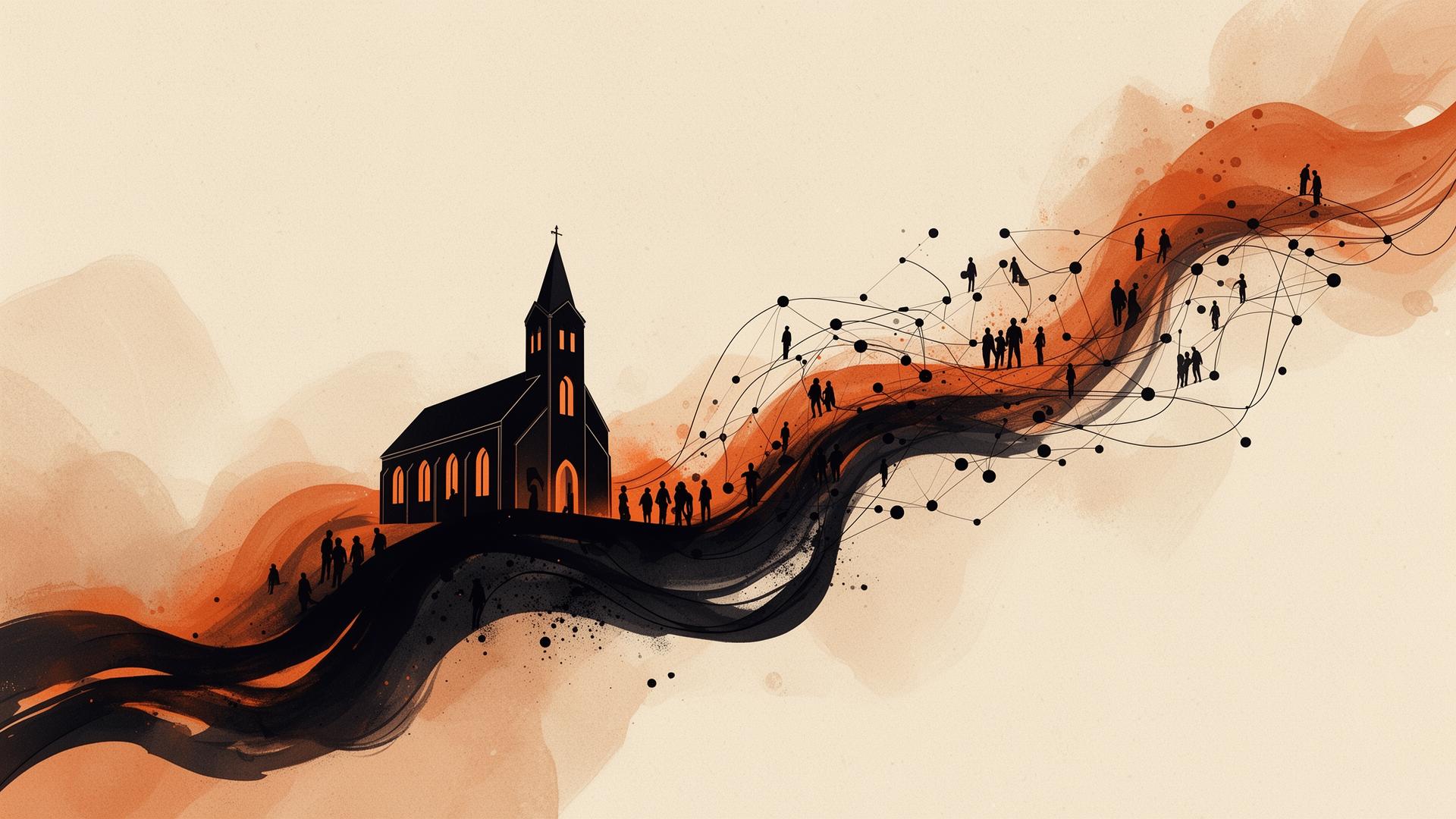
The most dangerous sentence in the Bible for a leader may be this one: "Trust in the Lord with all thine heart; and lean not unto thine own understanding. In all thy ways acknowledge him, and he shall direct thy paths" (Proverbs 3:5–6, KJV). It is dangerous because it confronts the one thing we are most tempted to trust: ourselves. We trust our instincts, our experience, our education, our polling, our planning, our gut. And when those things fail, we are shocked. But the Scripture does not say God will bless our best guess. It says He will direct the path of the person who stops leaning on self and starts leaning on Him. Every decision is an act of worship. The only question is: who are you leaning on?
Decisions are not neutral. They have destinations. A single choice can open a door to generations of blessing or generations of regret. The Bible is a book of decisions — some that flourished into destiny, and some that collapsed into catastrophe. And in nearly every case, the outcome was determined long before the consequences arrived. It was determined by who the person chose to lean on.
I. Adam leaned on his own appetite
Adam had everything. He walked with God in the cool of the day. He held dominion over a perfect world. He had a companion fashioned from his own side. And then one decision changed the trajectory of human history. The serpent did not force the fruit into his hand. Eve did not make him eat. Adam "took of the fruit thereof, and did eat" (Genesis 3:6, KJV). He leaned on his own understanding — his appetite, his curiosity, his desire to be like God on his own terms — and the cost was irreversible.
The cost of that one wrong decision was exile. It was thorns and thistles, sweat and sorrow, pain in childbirth and conflict in marriage, and a curse that would echo through every generation. Adam did not merely lose a garden. He lost the unbroken fellowship that made the garden home. And every wrong decision since then has carried the same DNA: a leader who trusted himself more than he trusted God, and a world that paid the price for it.
II. Satan leaned on his own ambition
Before there was a fallen man, there was a fallen angel. Satan was once covered in precious stones, an anointed guardian cherub who walked in the midst of the stones of fire. But he looked at his own beauty, his own wisdom, his own position — and he leaned on his own understanding. Isaiah records the decision that damned him: "I will ascend into heaven, I will exalt my throne above the stars of God" (Isaiah 14:13, KJV). He decided his throne should be higher than the throne of God.
That is the nature of leaning on yourself: it always wants a higher throne. It cannot submit. It cannot serve. It cannot rest in the assignment God has given. It must ascend, must control, must be acknowledged. And the end of that ascent is a fall. Satan did not become greater than God. He became the adversary of God. And every leader who leans on ambition instead of the Lord is walking the same staircase — not up, but down.
III. Judas leaned on his own calculation
Judas had spent three years with Jesus. He had heard the teaching, seen the miracles, watched the dead rise and the demons flee. He was entrusted with the money bag. And yet, when the moment of decision came, he leaned on his own calculation. He looked at the political situation, the religious authorities, the thirty pieces of silver, and he decided that betraying Jesus was the profitable move. The Gospels say that "Satan entered into Judas" (Luke 22:3, KJV), but Judas had already opened the door through a thousand smaller decisions to trust himself more than the Savior.
The cost was unspeakable. Judas did not merely lose his apostleship. He lost his peace, his future, and ultimately his life. Matthew records that when he saw what he had done, "he cast down the pieces of silver in the temple, and departed, and went and hanged himself" (Matthew 27:5, KJV). A wrong decision about Jesus will always cost more than you think it will. It will cost you your conscience first, and eventually it will cost you everything else.
The leader who leans on his own understanding is not leading. He is merely guessing — and the stakes of his guesses are the souls of the people he serves.
IV. The disciples leaned on Jesus
For every wrong decision, there is also a right one. The disciples were not scholars. They were not powerful. They were fishermen, tax collectors, ordinary men with ordinary fears. But they made one decision that changed everything: they left their nets and followed Jesus. Matthew records it with beautiful simplicity — "they forsook all, and followed him" (Luke 5:11, KJV). They did not know where the road would end. They only knew who was walking it.
That decision cost them everything — and gave them everything. They lost stability, reputation, safety, and eventually their lives. But they gained Christ, the kingdom, and a legacy that would outlast empires. The fruitfulness of their lives was not the result of their talent. It was the result of a single, costly decision to lean on Jesus instead of themselves.
V. The man at the pool decided to be made whole
In John 5, Jesus found a man who had been lying by the Pool of Bethesda for thirty-eight years. He was waiting for someone to put him into the water. He had excuses, explanations, and a familiar suffering. And Jesus asked him a question that cut through all of it: "Wilt thou be made whole?" (John 5:6, KJV). The man could have leaned on his story. He could have defended his limitations. He could have explained why change was impossible. Instead, he decided to be made whole.
Jesus told him, "Rise, take up thy bed, and walk" (John 5:8, KJV). And the man did. That one decision — to obey the word of Jesus instead of clinging to the identity of his sickness — set him free. Many leaders are lying by their own pool of Bethesda, waiting for permission, waiting for circumstances to change, waiting for someone else to make the move. But fruitfulness begins when we decide to obey what Jesus has already said.
VI. The woman with the issue of blood decided to reach
For twelve years, this woman had suffered. She had spent everything she had on physicians. She was ceremonially unclean, socially isolated, and spiritually exhausted. But when she heard that Jesus was passing by, she made a decision. "If I may touch but his clothes, I shall be whole" (Mark 5:28, KJV). She did not wait for an invitation. She did not wait for someone to validate her. She pressed through the crowd and touched the hem of his garment.
That decision made her whole. Jesus turned and said, "Daughter, thy faith hath made thee whole; go in peace, and be whole of thy plague" (Mark 5:34, KJV). The most powerful thing about her decision was that it was personal. She did not send someone else. She did not delegate her breakthrough. She reached. And every leader who wants to see fruitfulness in life and ministry must learn the same discipline: stop waiting for the crowd to part, and reach for Jesus.
VII. The decision before every decision
Every day, leaders make dozens of decisions — about people, money, vision, scheduling, partnerships, responses, silence, and speech. But beneath every one of those decisions is a deeper decision: who will I lean on? Will I lean on my own understanding, with all its bias, blind spots, and brokenness? Or will I acknowledge the Lord and trust Him to direct my path?
Acknowledging God is not a religious formality. It is a practical posture. It means praying before deciding. It means consulting Scripture before consulting strategy. It means listening to wise counsel even when it slows us down. It means admitting that we do not see everything, know everything, or have the strength to carry the weight alone. The leader who acknowledges God in all his ways does not become passive. He becomes directed. And the promise is not merely wisdom — it is that God shall direct thy paths.
A wrong decision can cost you your garden, your throne, your soul, your ministry, your marriage, your peace, and your future. A right decision can turn fishermen into apostles, sick people into witnesses, and bleeding women into daughters of faith. The difference is not intelligence. The difference is who you are leaning on.
So I ask you again, preacher, leader, saint: who are you leaning on? Your own understanding will fail you. Your own ambition will betray you. Your own calculation will bankrupt you. But the Lord will direct the path of the one who trusts Him with all his heart. Lean on Him. Acknowledge Him. Let Him lead. Every other choice depends on it.