Essay · On the Pastor's Soul
Stand Between the Porch and the Altar
Joel 2:17 — a call for priests to plead, and for leaders to remember that the destiny of cities, homes, and nations still hangs on praying leadership.
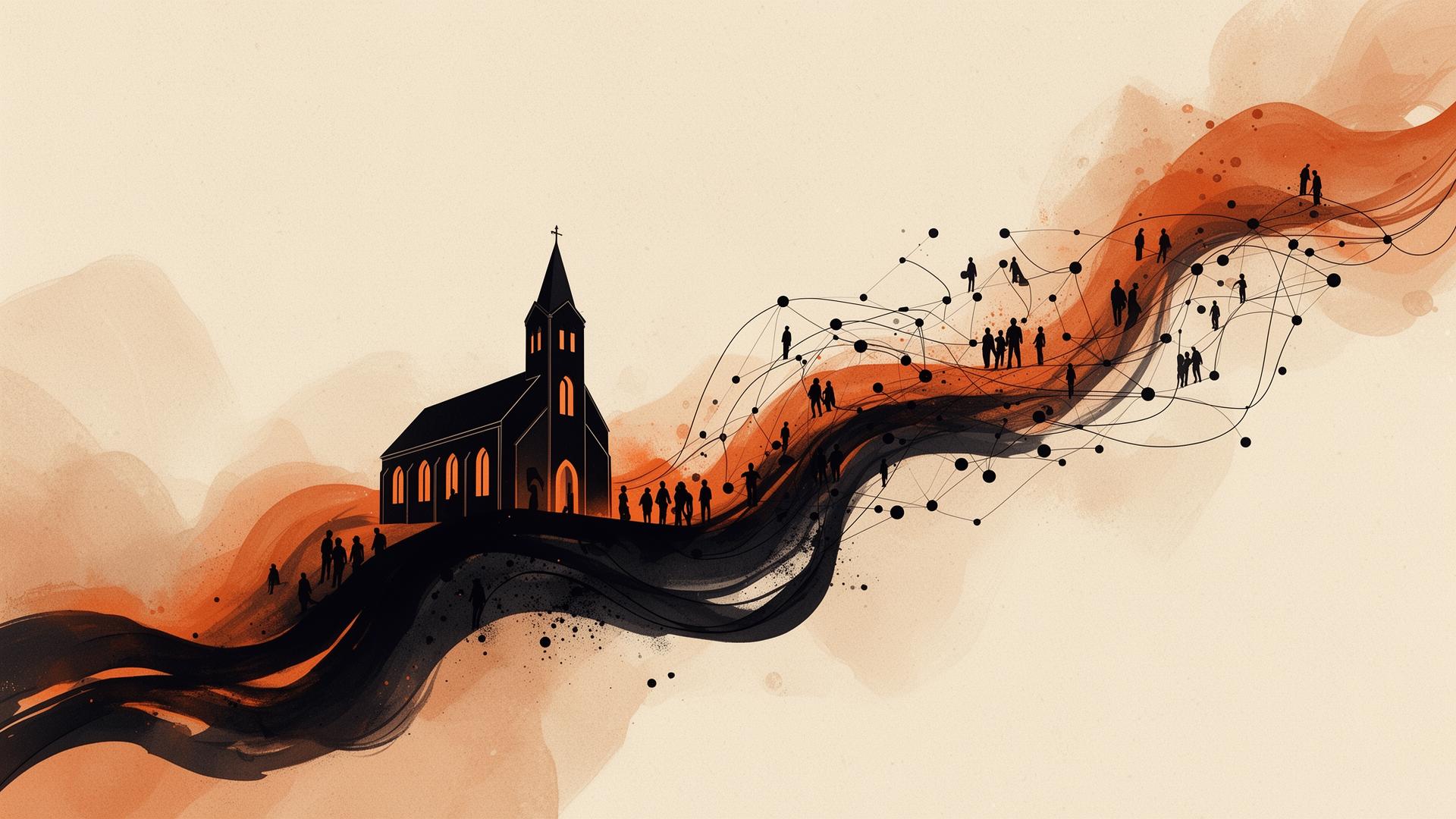
There is a moment in the book of Joel that stops me every time I read it. It is not the locusts, though they are devastating. It is not the famine, though it is real. It is the plea that rises from the mouth of God Himself: "Let the priests, the ministers of the Lord, weep between the porch and the altar, and let them say, 'Spare thy people, O Lord...'" (Joel 2:17). In the middle of national crisis, God did not first summon the army. He summoned the priests. He summoned the leadership to prayer.
We live in an hour that feels much like Joel's. The news is heavy. The culture is shifting beneath our feet. The things that once held firm — family, community, conscience — seem to be eroding in real time. And if there was ever a moment for the leadership of the church to remember what leadership actually looks like, it is now. Leadership is not merely preaching. It is not merely organizing. It is not merely strategizing. At its root, leadership is intercession. It is standing between the porch and the altar and crying out for the people God has entrusted to us.
I. The porch and the altar
The porch was the place of approach — where people entered the house of God. The altar was the place of sacrifice — where atonement was made. Between them stood the priest, the one who moved between the people's need and God's mercy. He was the bridge. He was the mediator. He was the one who, by prayer and by sacrifice, kept the nation in covenant with heaven.
This is still what pastors are. This is still what bishops, apostles, evangelists, teachers, and marketplace leaders are called to be: the ones who stand between the brokenness of the world and the healing power of God. Not through eloquence alone. Not through charisma alone. But through prayer. The priest who would not weep between the porch and the altar was a priest who had forgotten his calling. And a leader who will not pray is a leader who has forgotten that the real battle is not in the boardroom, the pulpit, or the strategy meeting — it is in the secret place.
The most powerful thing a leader can do is not what is visible from the stage. It is what is hidden in the closet — the crying out that moves heaven before it ever moves a crowd.
II. God is ready to respond
Read the verse again carefully. "Spare thy people, O Lord, and give not thine heritage to reproach." The priests are not merely venting frustration. They are not merely managing anxiety. They are pleading — with urgency, with tears, with the weight of the nation on their shoulders. And the remarkable thing is this: God had already promised to respond. The very next verses in Joel describe the outpouring of the Spirit, the restoration of the land, the removal of shame. But the trigger was the priesthood on its face before God.
There is a cry for praying leadership in our generation, and God is ready to answer it. The calamities of our cities, the confusion in our homes, the brokenness in our country — these are not beyond the reach of prayer. They are beyond the reach of politics, beyond the reach of programs, and beyond the reach of public relations. But they are not beyond the reach of a priesthood that will weep, plead, and cry out until heaven moves.
III. We can never pull away from prayer
One of the subtlest temptations of leadership is the slow drift away from prayer. It does not happen in a single day. It happens in the accumulation of busy seasons, back-to-back meetings, crises that demand immediate attention, and the subtle belief that your presence is more urgently needed in the room than in the closet. And yet, every leader who has lost his edge can trace it back to the moment prayer became optional rather than essential.
We must realize something: our authority as leaders is directly tied to our prayer life. The anointing does not rest on technique. It rests on relationship. And relationship is cultivated in the place of prayer. A pastor who does not pray is a pastor who is operating on memory. A bishop who does not pray is a bishop who is administrating rather than shepherding. An evangelist who does not pray is an orator with a microphone. The power we need for this hour is not generated in the public square. It is received in the secret place.
IV. A call to every leader
This word is not just for those with titles. It is for the mother praying over her children. It is for the deacon interceding for his block. It is for the business leader lifting up his employees before God. It is for the teacher crying out for her students. Wherever God has given you influence, He has given you the assignment of prayer. The leader who prays is the leader who changes atmospheres. The leader who prays is the leader who shifts generations.
But we must also be honest: there is a cost. Prayer costs time. It costs comfort. It costs pride. It costs the illusion that we are self-sufficient. To stand between the porch and the altar is to admit that we cannot fix this on our own — and to believe that God can. It is to trade our competence for His power, our strategy for His presence, our speaking for our listening.
V. Rediscover the altar
I believe God is calling a generation of leaders back to prayer. Not performative prayer. Not perfunctory prayer. Not the prayer we offer before meetings because it is expected. I mean the kind of prayer that costs something. The kind of prayer that happens when no one is watching. The kind of prayer that leaves you emptied of yourself and filled with Him. The kind of prayer that shapes sermons before they are written, decisions before they are announced, and families before they are broken.
May we — pastors, bishops, apostles, evangelists, teachers, leaders in our homes, leaders in the marketplace — rediscover our prayer life. May we remember that the porch and the altar are still there. The people are still approaching. The sacrifice has already been made. And the only question that remains is whether the priests will stand in the gap and weep until God responds.
The destiny of our cities, our homes, our nation, and our world still hangs on praying leadership. Go back to the altar. Heaven is waiting to respond.