Essay · On the Pastor's Soul
We Can't Do This Without Him
Programs can fill a room, but only the Holy Spirit can draw a soul to Christ and keep it. A call for the 21st-century church to rediscover the Person it cannot do without.
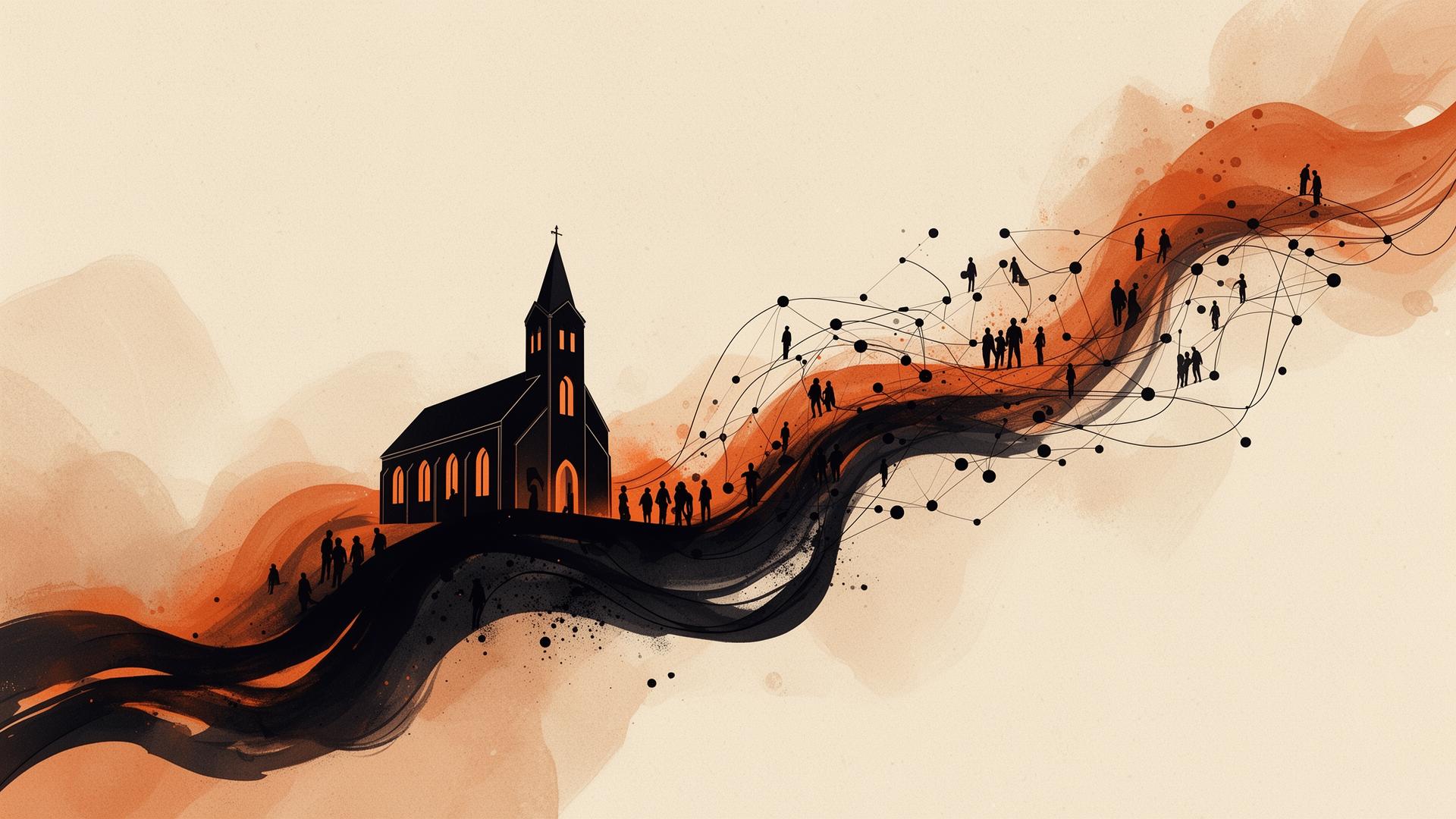
We have become very good at doing church in the twenty-first century. Our buildings are warm. Our sound systems are tuned. The lights are timed, the rooms are staged, the children's ministries are staffed, the coffee is drinkable, and the social media is consistent. We have programs for every age, pathways for every stage, and enough ambiance to make a first-time guest feel immediately at home. And yet, for all our systems, something is quietly missing — the very Person who makes the church the church. We have fallen in love with the mechanics of gathering and forgotten the ministry that must happen once people are gathered. We can bring them to the room. Only the Holy Spirit can bring them to Christ.
This is not a criticism of excellence. Excellence is not the enemy of the Spirit. But when excellence becomes our confidence, when production becomes our theology, when attendance becomes our goal, we have traded the blood-bought mission of the ecclesia for something that can be achieved by good marketing and better music. The local church is not a gathering of consumers to be retained. It is a community of disciples being formed, convicted, converted, and kept by the power of God.
I. The systems are impressive, but the Spirit is essential
It is possible to build a church that grows without the Holy Spirit being central. People will come for the music, the preaching style, the children's church, the programs, the friendships, the atmosphere, the sense of belonging. All of these are gifts. All of them can be doorways. But a doorway is not a destination. If a person comes to our church because of the production value and never encounters the living God, we have not succeeded — we have merely entertained them on their way to an unchanged eternity.
Jesus did not bleed and die for the church so that we could perfect the Sunday experience. He died to purchase a people who would be His own, who would be kept by His power, who would be filled with His Spirit, and who would carry His presence into a world that does not know Him. The goal is not that people come to church. The goal is that people come to Christ and stay with Christ. Everything else exists to serve that one end. And the only One who can accomplish that end is the Holy Spirit.
A church can have a full room and an empty altar. We must not confuse the crowd with the conversion, or the applause with the anointing.
II. What the Spirit was sent to do
In the Gospel of John, Jesus tells His disciples what the Holy Spirit will do when He comes. "When he comes, he will prove the world to be in the wrong about sin and righteousness and judgment" (John 16:8). The Spirit does not merely comfort the comfortable. He convicts the unconvinced. He exposes the lie that sin is private, that righteousness is cultural, and that judgment is irrelevant. He is the One who makes the truth impossible to ignore.
Notice the three areas of conviction. Sin, because humanity has rejected the only remedy. Righteousness, because Jesus has gone to the Father and the standard has been set by His life, not ours. Judgment, because the ruler of this world has already been condemned and every person who refuses the Son will stand in the same courtroom. This is the work the Spirit does in the soul. No lighting rig can do this. No sermon series can do this without Him. Programs do not convict. The Spirit convicts.
III. No one comes except the Father draws him
Jesus says it with absolute clarity: "No one can come to me unless the Father who sent me draws them" (John 6:44). This is the humbling truth every preacher must reckon with. We are not the draw. Our preaching is not the draw. Our music is not the draw. Our programs are not the draw. The Father is the draw, and He does the drawing by the Holy Spirit. We are the witnesses, the heralds, the stewards of the message. But the saving work is His.
This is why prayer is not a prelude to ministry. Prayer is the ministry. It is in prayer that we ask the Father to do what only He can do. It is in prayer that we acknowledge our utter dependence on the Spirit. It is in prayer that we move from asking God to bless our plans to asking God to accomplish His. When we stop praying, we stop depending. When we stop depending, we start substituting. And the substitute is never equal to the real thing.
The twenty-first-century church must rediscover this truth. We can build the most attractive gathering the world has ever seen, but if the Spirit is not drawing people to the Savior, we have only built a community center with a cross on the wall. The presence of the Spirit is not an upgrade. It is the difference between a living church and a dying organization.
IV. The danger of forgetting the Spirit
When a church forgets the Holy Spirit, it does not collapse overnight. It simply becomes something else. It becomes a place where people are managed instead of transformed. Where growth is measured in attendance rather than obedience. Where the pastor is a performer, the congregation is an audience, and the sermon is a product designed to satisfy rather than a word designed to wound and heal.
The fruit of a Spirit-less church is not always scandal. Sometimes it is simply boredom. People come, they sit, they sing, they leave, and nothing eternal happens. The Word is preached, but it does not land. The invitation is given, but no one is moved. The service is excellent, but the soul is unchanged. And over time, the people who came because of the production realize that the production is all there is. So they move to the next church with better production, because nothing deeper was ever offered to them.
This is not the church Jesus purchased. He paid too high a price for a gathering that can be replicated by good branding. He sent the Spirit so that His church would be a living body, empowered by a living Person, bearing the fruit of a living relationship with God. When we marginalize the Spirit, we lose the very thing that makes us different from every other organization in the world.
V. Rediscover the ministry of the Holy Spirit
So what do we do? We repent. We stop treating the Holy Spirit like a doctrine to be defended and start treating Him like a Person to be welcomed. We pray for His presence not as a warm feeling but as the essential condition for every true work of God. We preach in dependence on Him, not in confidence in our outlines. We lead in surrender to Him, not in confidence in our strategies. We disciple people toward Him, not merely toward our values and programs.
We must also remember that the Spirit came to glorify Jesus, not to make us spectacular. Every true move of the Spirit will exalt Christ, convert sinners, and produce the kind of holiness that cannot be faked. If a movement exalts the leader more than the Lord, or excites the crowd more than it convicts the conscience, it is not the Holy Spirit we are encountering. It is our own appetite for spectacle.
Programs can fill the room. The Holy Spirit fills the soul. Let us be a twenty-first-century church that remembers what the blood-bought church was always meant to be: a people filled with the Spirit, drawn by the Spirit, kept by the Spirit, and sent by the Spirit to draw others to the Savior.