Essay · On the Pastor's Soul
When the Crowd Thins
People will love you when following you pays well. But when the cost rises, the crowd thins — and the leader must learn that the Lord who called him is still standing beside him.
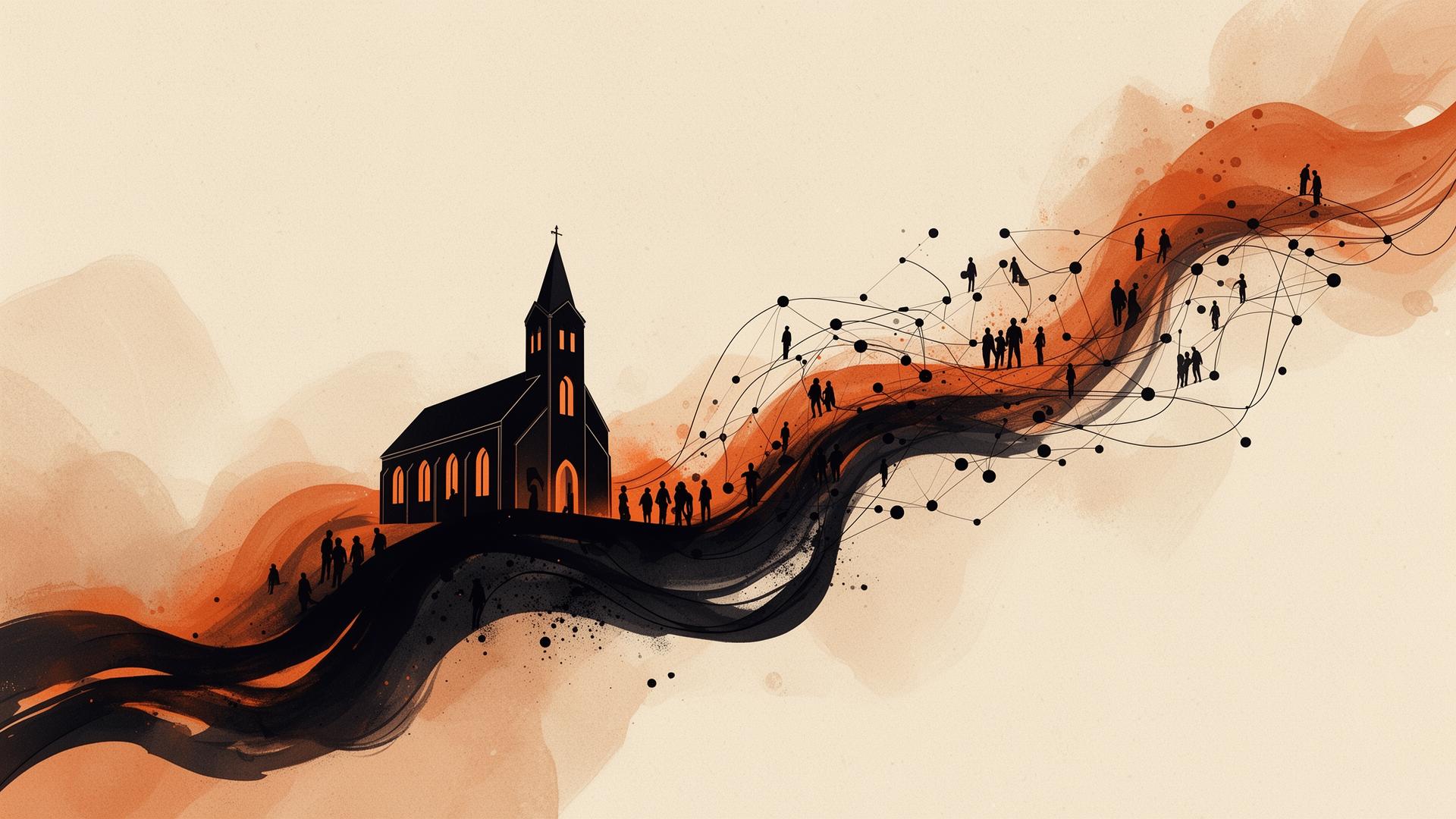
There is a painful reality in Christian leadership that we do not talk about often enough, and it is this: not everyone who walks with you loves you. Some walk with you because of what you carry. Some stay close because of what they gain. Some celebrate you while the path is easy, the platform is visible, and the benefits are clear. But when the road turns costly, when obedience requires sacrifice, when the leader can no longer make life comfortable for those around him, the crowd begins to thin. And it is in that thinning that a leader learns what he was really made of — and who was really with him all along.
We must be honest about this, because the fantasy of universal loyalty is dangerous. It sets a leader up for devastation. It makes him trust voices that were never committed to his soul. It makes him interpret departure as a failure of his own character, when often it is simply the exposure of someone else's motive. People will love you when things are well and when following you serves their interest. But when it does not, they will leave, or worse, their unseen agenda will finally come to light. The Scriptures do not hide this. They show it plainly — even in the lives of the greatest leaders who ever lived.
I. Judas followed until it no longer benefited him
Judas Iscariot walked with Jesus for three years. He saw the miracles. He heard the sermons. He was sent out with the others to heal and cast out demons. He was in the inner circle. And yet the Gospels tell us the motive that was always hiding beneath the surface: "He did not say this because he cared about the poor but because he was a thief; as keeper of the money bag, he used to help himself to what was put into it" (John 12:6). Judas was not following Jesus for Jesus. He was following Jesus for the bag.
The moment the benefit dried up, the betrayal began. When Mary anointed Jesus with expensive perfume, Judas protested. When Jesus spoke of suffering and death, Judas's appetite for a kingdom of glory and gold must have soured. And when the religious authorities offered him thirty pieces of silver, the hidden agenda finally stepped into the light. Judas did not betray Jesus because he was overpowered by Satan. He betrayed him because following Jesus no longer paid him what he wanted. The crowd that follows for gain will always scatter when gain disappears.
This is a mirror every leader must look into. Who is around you because they love the mission, and who is around you because they love the platform? Who serves because they serve Christ, and who serves because they are building a résumé? Who weeps with you in private, and who only claps for you in public? The answers do not usually come when the offerings are full and the seats are taken. They come when the hard decision is made, the unpopular stand is taken, and the provision that once made everyone comfortable begins to dry up.
The crowd that follows for bread will leave when the basket is empty. The crowd that follows for the Savior will stay even when it costs them everything.
II. Paul, alone at the end of the road
The second chapter of this lesson is written in a Roman prison, in the final letter of a man who gave everything for the gospel. Paul writes to Timothy with a loneliness that aches across the centuries: "Do thy diligence to come shortly unto me: For Demas hath forsaken me, having loved this present world, and is departed unto Thessalonica; Crescens to Galatia, Titus unto Dalmatia. Only Luke is with me" (2 Timothy 4:9-11, KJV). This is the inventory of a life spent pouring into others — and at the end, the count is painful. Demas left because he loved this world. Crescens and Titus were called away by ministry. Only Luke remained.
Paul was not bitter. He was human. He wanted Timothy near. He wanted his cloak, his books, and especially his parchments. He was cold, forgotten, and awaiting execution. And then the betrayal sharpened: "Alexander the coppersmith did me much evil: the Lord reward him according to his works: Of whom be thou ware also; for he hath greatly withstood our words" (2 Timothy 4:14-15, KJV). There was not only abandonment. There was active opposition from someone Paul had once known. The wound was not just from the departure of friends. It was from the hostility of a former companion.
And then the deepest cut: "At my first answer no man stood with me, but all men forsook me: I pray God that it may not be laid to their charge" (2 Timothy 4:16, KJV). This is one of the most devastating sentences in the Bible. Paul, the apostle, the church planter, the man who had poured himself into disciples and churches across the empire, stood before Caesar's court — and no one stood with him. Everyone left. Everyone. The crowd that had watched him heal, preach, and plant was gone. The co-laborers had vanished. The platform had collapsed. And Paul stood alone.
III. Tough times reveal what good times conceal
The reason this lesson is so necessary is because hardship is the great revealer. It exposes what praise has hidden. It shows who is building with you and who is merely building beside you. A person can stand with you for years without ever being truly with you. They can serve in your ministry, sit in your meetings, and even call you friend — and still be committed only to what you provide, not to who you are. That is not community. That is contract. And when the contract no longer pays, the relationship ends.
This is why every leader must prepare for the thinning before it happens. You prepare by not building your identity on the size of your circle. You prepare by not measuring your worth by who shows up. You prepare by making your inner life with God so strong that the loss of human companionship does not become the loss of your soul. If your peace depends on the crowd, you will betray your calling to keep the crowd. If your peace depends on Christ, you can walk through the thinning without losing yourself.
The abandonment is not always malicious. Sometimes people leave because they are afraid. Sometimes they leave because they are immature. Sometimes they leave because God sends them elsewhere. But sometimes they leave because they were never truly yours. And the sooner a leader can accept this without becoming cynical, the healthier he will be. Cynicism is the scar that forms when we let abandonment make us hard. Wisdom is the grace that forms when we let abandonment make us clear-eyed.
Do not be shocked when people leave you. Be shocked when you allow their leaving to make you leave the One who never left.
IV. The One who stood when everyone else sat down
The most important words in 2 Timothy 4 are not about abandonment. They are about presence. Right after Paul says that all men forsook him, he writes this: "Not- withstanding the Lord stood with me, and strengthened me; that by me the preaching might be fully known, and that all the Gentiles might hear: and I was delivered out of the mouth of the lion" (2 Timothy 4:17, KJV). This is the anchor of the entire passage. Men forsook him. But the Lord stood with him. The Lord strengthened him. The Lord delivered him. The crowd thinned to one — and that One was enough.
This is the testimony every leader must cultivate. Not the testimony that everyone loves you. Not the testimony that your church is growing, your board is unified, and your circle is loyal. The testimony that the Lord stands with you. That is the only presence that cannot be taken. That is the only strength that does not fatigue. That is the only loyalty that does not negotiate. When the people leave, when the friends betray, when the co-laborers are scattered, the Lord still stands.
And notice what happens because the Lord stood with Paul: the preaching was fully known, and the Gentiles heard. Paul's abandonment did not silence the gospel. It amplified it. God used the loneliness of a forsaken apostle to make the message go further. This is the strange math of the kingdom: when the crowd thins, the voice can become clearer. When the noise of human approval fades, the Word of God can be heard more distinctly.
V. Prepare for the thinning, pastor
So here is the word to every leader who reads this: prepare for the thinning. Do not wait until it happens to build your interior life. Do not wait until the betrayals come to find out who you are without the crowd. Build your communion with God now. Practice preaching to an audience of One. Learn to make decisions that please God even when they displease people. Cultivate friendships that are rooted in the Spirit, not in strategy. Develop the kind of courage that can stand alone and still speak.
When people leave, do not chase them. When hidden agendas surface, do not negotiate with them. When the cost of obedience rises, do not lower the price to keep buyers. The gospel is too precious to be sold at a discount. Your calling is too sacred to be managed by public opinion. And your soul is too valuable to be built on the sand of human approval.
The crowd will thin. It always does. But the Lord will stand. He always does. And the leader who learns to live from that standing will not be destroyed when the room empties. He will simply discover that the One who was truly with him was enough all along. Prepare your heart, pastor. The abandonment is coming — but so is the strengthening.