Essay · On the Body of Christ
Who's Holding Your Arms?
Church attendance is surface-level support. Real support is measured in seasons of difficulty — and most leaders are carrying the weight of ministry with almost none of it.
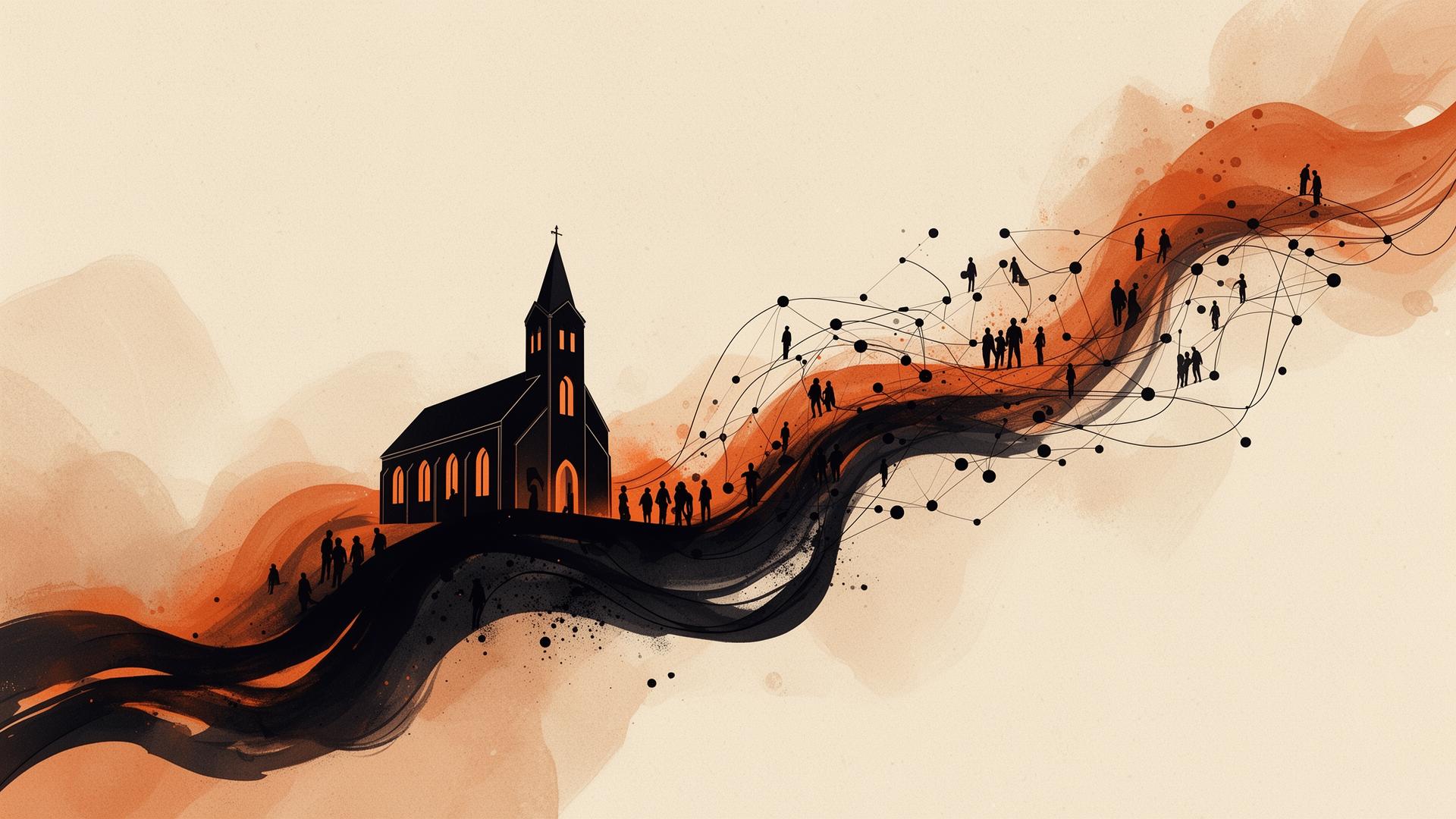
When the conversation regarding biblical support is engaged, there are several things that should come to mind. Support is something that all of mankind longs for and certainly needs. The idea that I can do life alone is the equivalent of saying I can do life without support — and no one has ever done that successfully. Not the strongest leader. Not the most anointed preacher. Not the man who looks like he has it all together on Sunday morning and falls apart on Monday afternoon.
From the beginning of time God recognized that out of all the things man had, what he needed most was support. God is quoted in Genesis 2:18 saying, "It is not good that the man should be alone; I will make him an help meet for him." In this passage God addresses the fact that it is not good for man to attempt to live or carry out his divine will alone, because he needs support. Eve was not merely a woman given to Adam for procreation — she was to be Adam's support.
Consider the setting. Adam was in a perfect earth, in the middle of a perfect garden, in unbroken fellowship with God. It was already expected that God would give heavenly support to the man He had placed there. And yet support in the life of Adam was to be twofold: heavenly and earthly. So God gave him Eve. Read that slowly, leader. Even a man walking with God in paradise needed someone beside him in the dirt.
I. What support actually means
Support, in its truest meaning, is to hold up a structure physically, or to provide the necessary help, comfort, or financial backing for someone or something to succeed. Support shows up in different ways. Sometimes it is a presence. Sometimes it is a check. Sometimes it is silence in a room where you are the one who finally gets to stop talking.
Even though it shows up in different ways, support is something all of us need and crave. When our hearts are broken, we need support. When we are grieving the loss of a loved one, we need support. When we are getting married, we need support. It is at every phase of life that we discover we need support. From the time we are born until the time we depart from this earth, all of us will need support at some point or another in this lifetime.
II. Biblical support touches a deeper place
Regular support is one thing. But we are thinking in terms of biblical support, and biblical support touches a deeper place. Biblical support is given from a different place, because it should come from a place of love. Biblical support is non-judgmental support. It is the kind of support that is given in the good times of life as well as the bad times of life. It is something we as believers should expect from one another as members of the Body of Christ.
Let us be clear about its limits. As believers, our support must stop at the door of sin. We are not called to support anyone into sin — but we are absolutely called to support one another as we walk out of it. James 5:16 says we are to pray one for another, and intercession is a form of support. When you pray for a brother who cannot yet pray for himself, you are holding up a structure that would otherwise collapse.
Throughout the New Testament we find the phrase one another repeated again and again, and every occurrence is a call to support. The Scripture says, "And be ye kind one to another, tenderhearted, forgiving one another, even as God for Christ's sake hath forgiven you" (Ephesians 4:32, KJV). Kindness, tenderheartedness, forgiveness — these are all attributes of being supportive. Therefore biblical support runs deeper than the general support the world knows.
III. Support in ministry is a level of its own — and it is missing
Biblical support in ministry is another level of support within itself, and it is missing from leadership. Church attendance is a surface level of support. Real support of those who serve in ministry is not measured by program attendance; it is measured in seasons of difficulty. Anybody can fill a seat. Very few will fill a gap.
Jesus told Peter, "Satan hath desired to have you, that he may sift you as wheat: but I have prayed for thee" (Luke 22:31–32). Jesus supported Peter with prayer when Peter did not even know he needed it. That is the highest order of support — support that meets you before the crisis does. Support means the most when someone is supporting you and you do not even know you need it.
Aaron and Hur supported Moses in Exodus 17 while he stood on the mountain holding up the rod of God and his arms grew weak. What a great picture of support: not when you are strong and impressive, but when you are becoming weak. Most people will abandon you in weakness. Aaron and Hur recognized that Moses, God's man, needed support and not a fan club. There is a difference between people who admire your posture and people who will hold up your arms.
IV. Barnabas, the son of encouragement
One of the greatest supporters in ministry was a man named Barnabas. His name means son of encouragement, and he was a great encourager and an even better supporter. It was Barnabas who took time with Paul when nobody else wanted anything to do with him. While the entire known church at that time wanted to stay away from Paul — and understandably so, given his history — Barnabas drew near to support him. That is real support. That is biblical support.
It was Barnabas who brought Paul to the leaders of the church and confirmed that the hand of God was upon his life. I am convinced that those early years of Paul's ministry were successful in part because he had some biblical support. Remove Barnabas from the story and you may remove the apostle from the letters.
Here is the hard truth for leaders: people can support your activities, but that does not mean they support you. So many in leadership end up with their hearts broken because they have very few — sometimes zero — biblical supporters in their lives. Paul had one in Barnabas. Most pastors today cannot name one.
V. The question we have to ask
What could I do with some biblical support? Who could I become with some biblical support? What impact upon the world could I have if I had some biblical support? And then the harder question, the one that turns the mirror around: who is waiting on me to be that for them?
The Body of Christ was never designed to be a room full of people being carried by one exhausted leader. It was designed to be a people who hold one another up. Heavenly support and earthly support. The Spirit of God and the hands of Aaron and Hur. The prayer of Jesus and the loyalty of Barnabas.
May we all provide that biblical support we all so desire to have.